Find CE FCC GPRS Modem for SCADA, PLC, and Remote Monitoring
Source 30 industrial wireless modems supporting GSM, 3G, and 4G networks with RS232/RS485 ports. Compare CE FCC GPRS Modem options from verified Chinese manufacturers for SCADA, PLC, and remote monitoring applications.
Key considerations
Products List


Hot Sale Fiberhome Modem Gpon Hg6143D 1pot+4ge+2USB 2.4/5g 5dB Fbh APC
$25.00 - $35.00
MOQ: 500 Pieces

Professional Router LTE SIM Card WiFi Router Wireless Hotspot 3G 4G Router
$18.00 - $26.00
MOQ: 1 Pieces


High Proformance 2g/3G/4G LTE Global Frequency Band 4G LTE Cat4 Router Modem
$60.00 - $100.00
MOQ: 1 Pieces


Comprehensive Sourcing Guide
Strategic Sourcing Guide for Industrial GPRS and 4G Modem Solutions
The global demand for reliable industrial connectivity has elevated the importance of robust cellular modems, particularly those supporting GPRS, 3G, and 4G protocols. For procurement professionals, the core keyword "CE FCC GPRS Modem" represents a specific intersection of regulatory compliance and technical capability. While the "CE" mark indicates conformity with European health, safety, and environmental protection standards, and "FCC" denotes compliance with United States Federal Communications Commission regulations, the actual availability of these certifications varies significantly by manufacturer and specific product model. Sourcing a device that meets these criteria requires a disciplined approach to verifying technical specifications, understanding cost drivers, and evaluating supplier capabilities without relying on unverified marketing claims. This guide outlines the essential factors for buyers navigating the industrial modem market, focusing on evidence-based decision-making and risk mitigation.
Technical Specifications and Interface Requirements
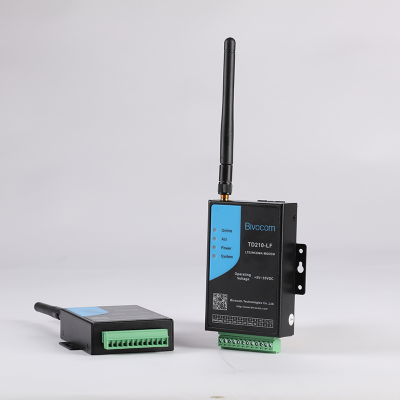
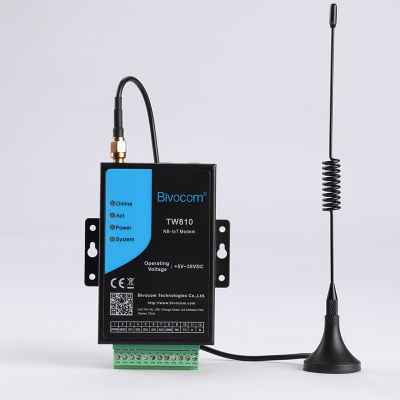
When evaluating industrial wireless modems, the primary focus must be on the communication interface and power requirements, as these dictate the device's integration feasibility within existing SCADA or PLC systems. The market offers devices with varying power ranges, such as those operating within a DC 5-35V spectrum, which provides flexibility for different industrial power environments. A critical specification to verify is the serial port configuration; many industrial-grade units feature a single RS232/RS485 port, enabling direct connectivity with legacy industrial equipment. Buyers should also scrutinize the input/output (I/O) capabilities, as some models provide up to five I/O points for digital monitoring or control tasks, which is essential for remote automation applications.
Furthermore, the physical dimensions and housing material are vital for deployment in harsh environments. Compact units, often measuring approximately 91x58.5x22 mm, are designed for space-constrained control cabinets. The housing is typically constructed from metal to provide electromagnetic interference (EMI) shielding, with an ingress protection rating of IP30, which guards against solid objects larger than 2.5mm but does not offer full water resistance. In contrast, other product categories, such as Optical Network Units (ONUs), may utilize plastic casings and different dimensions, such as 170mm(L)*130mm(W)*30mm(H), highlighting the need to distinguish between cellular modems and fiber termination equipment. Power consumption is another key metric; industrial modems often operate with a current draw of less than 85mA at 12V, ensuring energy efficiency during continuous operation.
Regulatory Compliance and Certification Verification
The presence of "CE" and "FCC" in a product search query often leads to confusion regarding actual compliance status. While many industrial modems list certifications such as ISO, RoHS, and CE, the specific inclusion of FCC certification is not universal and must be explicitly verified for each unit. In the provided data, certifications like ISO, RoHS, and CE are observed for specific industrial modem models, but explicit mention of FCC compliance is absent from the supplied facts. Buyers must understand that "CE" is a mandatory conformity mark for products sold in the European Economic Area, whereas "FCC" is a requirement for electronic devices marketed in the United States.
Procurement teams should request the specific test reports or certification documents for the exact model number being considered, rather than accepting general claims. For instance, while a supplier may state that their product is "CE RoHS Compliant," this does not automatically validate FCC status. The distinction is critical because non-compliant devices can face customs seizures, legal penalties, or rejection by end-users in regulated markets. Additionally, some products may carry certifications like GS or ISO alongside CE, indicating a broader adherence to quality and safety standards. However, the absence of a specific certification in the product listing should be treated as a gap that requires clarification from the supplier before any purchase order is issued.
Cost Drivers and Pricing Dynamics
The pricing of industrial GPRS and 4G modems is influenced by a complex array of factors, including the complexity of the hardware, the level of certification, and the volume of the order. The observed price range in the market spans from $0.01 to $501.1, a wide variance that reflects differences in product class, from basic connectivity modules to fully integrated industrial gateways. Several variables drive these costs. First, the communication technology itself is a primary driver; devices supporting 4G and LTE typically command a higher price than those limited to GPRS or 3G due to the advanced chipset requirements and higher data throughput capabilities.
Second, the build quality and environmental rating significantly impact cost. A metal housing with IP30 protection and a wider operating temperature range will be more expensive than a plastic-cased unit intended for indoor use. The inclusion of features such as SMS support, external antenna connectors, and multiple I/O points also adds to the unit price. Furthermore, the Minimum Order Quantity (MOQ) plays a role in the effective cost per unit. While some suppliers offer an MOQ as low as 1 unit for testing purposes, others may require orders of up to 1000 units to unlock lower price tiers. Buyers should analyze the total cost of ownership, including potential customization fees, packaging requirements, and shipping costs, rather than focusing solely on the unit price.
Typical Applications and Deployment Scenarios
Industrial wireless modems are designed to bridge the gap between remote field devices and central monitoring systems, making them indispensable in various sectors. The primary application is in SCADA (Supervisory Control and Data Acquisition) systems, where these modems facilitate the transmission of data from remote sensors and PLCs to a central control center. The support for RS485 and RS232 protocols allows these devices to interface seamlessly with a wide range of industrial machinery, from water treatment plants to manufacturing lines. Additionally, the capability to support SMS alerts enables critical alarm notifications, ensuring that operators are immediately informed of system failures or anomalies.
Beyond SCADA, these modems are utilized in asset tracking, where the ability to transmit location and status data via GSM or 4G networks is essential. The "Information content" supported by these devices often includes voice and data transmission, allowing for two-way communication in certain configurations. It is important to distinguish these cellular modems from fiber optic equipment, such as ONUs, which are designed for FTTH (Fiber to the Home) or FTTB (Fiber to the Building) networks. While ONUs serve as the termination point for fiber connections and support protocols like GPON and EPON, GPRS and 4G modems provide the wireless backhaul necessary for mobile or remote applications where fiber is unavailable. Understanding the specific network requirements, such as the need for GSM support or specific transmission distances, is crucial for selecting the right hardware.
Supplier Evaluation and Supply Chain Reliability
Selecting a reliable supplier is as important as selecting the right product. Buyers should evaluate potential partners based on their production capacity, quality control processes, and logistical capabilities. The "Supply Ability" of a supplier, such as 1000 sets per week, indicates their capacity to meet demand without significant delays. However, capacity claims should be cross-referenced with the supplier's track record and financial stability. The "Place of Origin" is another critical factor; while many industrial modems originate from manufacturing hubs in Fujian, China, others may come from different regions like Hubei. The geographic location can influence lead times, shipping costs, and the ease of communication.
Suppliers should also demonstrate flexibility in customization and packaging. The availability of OEM (Original Equipment Manufacturer) options allows buyers to brand the device with their own logo or modify the firmware to suit specific application needs. Packaging details, such as standard cartons or neutral packaging, should align with the buyer's internal logistics and distribution requirements. Furthermore, the "Condition" of the product, typically listed as "New," should be verified to ensure that no refurbished or used units are being sold as new. Buyers should also inquire about the "Port of Dispatch," such as Xiamen, China, to understand the shipping routes and potential transit times. A supplier that offers clear communication channels and transparent documentation regarding their manufacturing process is better positioned to support long-term procurement needs.
Quality Control and Long-Term Procurement Considerations
Ensuring the long-term reliability of industrial modems requires a robust quality control strategy. Buyers should insist on comprehensive testing protocols that cover electrical safety, electromagnetic compatibility, and environmental durability. The "Warranty" period, often cited as 12 months for similar industrial equipment, serves as a baseline for the supplier's confidence in their product, but it should be supplemented by a clear policy for handling defects or failures. The "Firmware" version and language support, such as English interfaces, are also critical for maintenance and troubleshooting in international deployments.
Long-term procurement considerations extend beyond the initial purchase to include the availability of spare parts, firmware updates, and technical support. As cellular networks evolve, particularly with the phase-out of 2G and 3G networks in many regions, buyers must ensure that the modems they procure are future-proofed or have a clear upgrade path. The "Customization" availability mentioned in product listings suggests that suppliers can adapt hardware or software to meet changing requirements, which is a valuable asset for long-term contracts. Additionally, the "Weight" and "Dimensions" of the device should be considered for installation logistics, especially in large-scale deployments where thousands of units may need to be installed in remote locations. By focusing on these comprehensive factors, buyers can mitigate risks and ensure a stable, compliant, and efficient supply chain for their industrial connectivity needs.
FAQs
What certifications do these industrial modems hold?
The devices typically hold ISO, RoHS, and CE certifications. Some listings also mention GS compliance, but FCC certification is not explicitly confirmed in the provided product facts.
Which power range supports these wireless modems?
These units operate within a DC 5-35V power range. Specific models may require a standard power input of DC 12V with currents ranging from 0.5A to 1.5A depending on the configuration.
How many I/O points are available on the modem?
The industrial modems provide up to 5 I/O points for digital monitoring. This capability allows for direct integration with remote sensors and control tasks in SCADA systems.
Can these devices support SMS functionality?
Yes, the modems support SMS for critical alarm notifications. This feature enables operators to receive immediate alerts regarding system failures or anomalies from remote field devices.
What is the housing material and protection rating?
The housing is constructed from metal with an IP30 rating. This design provides electromagnetic interference shielding and protection against solid objects larger than 2.5mm.
Which serial ports are included in the interface?
The devices feature one serial port supporting RS232 or RS485 protocols. This configuration enables direct connectivity with legacy industrial equipment and PLC systems.
What is the supply capacity for these units?
Suppliers indicate a supply ability of 1000 sets per week. This capacity ensures that demand can be met without significant delays for bulk procurement orders.